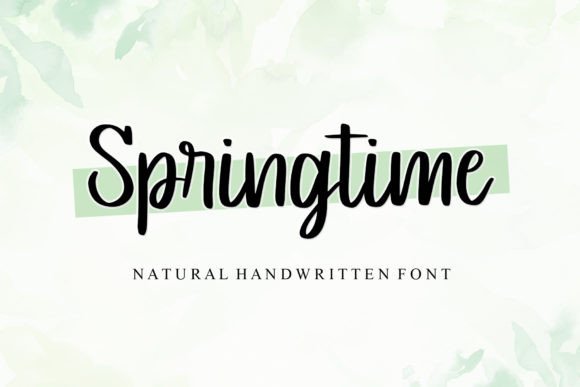
Springtime Font: A Fresh Take on Handwritten Typography
In the search for a typeface that feels both personal and polished, the Springtime handwritten font offers a compelling solution. This elegant script is more than just a collection of letters; it's a versatile creative asset designed to inject life, warmth, and a touch of timeless charm into a wide array of visual projects. For designers and creators seeking to elevate their work, understanding its practical applications is key to unlocking its full potential.
Why Handwritten Fonts Like Springtime Matter
In a digital landscape often dominated by clean sans-serifs and rigid geometric forms, a well-crafted handwritten font provides a crucial counterbalance. It introduces an element of humanity, authenticity, and approachability. Springtime, with its unique and beautiful letterforms, excels at this. Each character is designed to flow naturally, creating a rhythm that feels organic and engaging. This quality is invaluable for branding, where establishing an emotional connection with an audience is paramount. A logo or brand mark set in Springtime can instantly communicate creativity, care, and a personal touch.
Practical Applications for Designers and Creators
The true strength of Springtime lies in its adaptability across various creative projects. Its PUA encoding is a significant technical advantage, granting effortless access to a full set of glyphs and swashes. This allows for extensive customization, enabling designers to craft truly unique and polished typographic compositions without technical barriers.
Consider these applications for integrating this font into your design workflow:
- Brand Identity & Logo Design: Create memorable logos, monograms, and brand marks that stand out. Use swashes to add a distinctive flourish to business cards, letterheads, and packaging.
- Marketing & Social Media Graphics: Design eye-catching quotes, promotional banners, and Instagram stories that feel personal and engaging, boosting user engagement.
- Editorial & Web Design: Use it for pull quotes, article headers, or stylistic accents in editorial design to break up text and add visual interest. It can also add personality to specific elements in UI design for a more human-centered experience.
- Packaging & Merchandise: Enhance packaging design for artisanal goods, cosmetics, or stationery. It’s also perfect for creating stylish merchandise like apparel prints, mugs, and tote bags.
Integrating Springtime into a Professional Design System
While Springtime is visually striking, effective use requires thoughtful integration within a broader visual design system. To ensure your designs remain professional and accessible, balance is key. Pair it with a simple, highly readable sans-serif font for body copy to maintain visual hierarchy and clarity. This contrast allows the handwritten font to shine as an accent without compromising the overall user experience or readability of the message.
When selecting any creative asset, always consider your audience and project goals. For a project targeting a sophisticated market, use Springtime sparingly for elegant highlights. For a more playful, youthful brand, it can be used more liberally. Test its scalability in your designs to ensure it remains legible in both large headlines and smaller applications. Ultimately, the best typography choices are those that serve the communication goal while enhancing the modern aesthetics of the project.
Thoughtful curation of your design toolkit is what separates good work from great. A resource like the Springtime font provides not just a stylistic option, but a means to create more meaningful and resonant visual communication. By pairing its inherent warmth with strategic design principles, you can produce work that is not only beautiful but also effective and deeply connected to its intended audience.