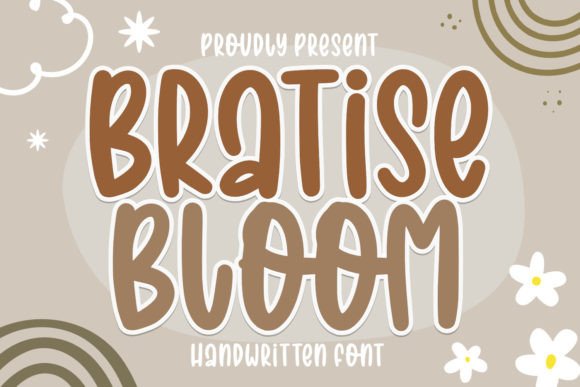
Bratise Bloom: A Playful Handwritten Font for Modern Design
In the crowded landscape of digital typography, finding a font that perfectly balances whimsy with professionalism can feel like striking gold. Bratise Bloom emerges as that rare gem—a delightful handwritten font that exudes a playful, adorable theme without sacrificing clarity. Its charming design captures the essence of cuteness and injects a touch of joy into any project, making it a standout creative asset for designers seeking to add personality and warmth to their work.
The Unique Design DNA of Bratise Bloom
What sets Bratise Bloom apart is its innovative fusion of styles. It masterfully combines the organic, flowing feel of a handwritten script with the structured legibility of a clean sans-serif. This unique pairing solves a common challenge in graphic design: how to incorporate a personal, human touch without compromising readability. The result is a typeface that feels friendly and approachable, yet remains crisp and clear at various sizes, making it incredibly versatile for both digital and print applications.
Practical Applications Across Design Projects
The true value of a font like Bratise Bloom lies in its practical application. Its whimsical character makes it ideal for projects that aim to connect on an emotional level. Consider its role in strengthening brand identity for businesses that want to convey friendliness, creativity, or approachability. It can become the cornerstone of a visual language for a boutique, a children's brand, or a creative studio, instantly setting a welcoming tone.
For marketing materials and social media graphics, this font shines. It can transform a standard Instagram post or a Facebook ad into something eye-catching and memorable. Its handwritten quality adds authenticity, which is crucial for building trust and engagement in digital marketing. Similarly, in packaging design, especially for artisanal goods, cosmetics, or food products, Bratise Bloom can elevate the unboxing experience, making the product feel more personal and special.
Beyond these, its applications are vast:
- Web & UI Design: Perfect for website headings, call-to-action buttons, or landing page banners where you want to guide the user with a friendly, directive tone.
- Editorial & Print Design: Adds a delightful accent to magazine layouts, greeting cards, invitations, and posters, breaking up monotony with visual interest.
- Presentations & Digital Products: Makes slide decks, ebooks, and online course materials more engaging and visually cohesive.
- Logo Design & Branding: Serves as a primary or secondary font for brands whose identity revolves around creativity, joy, and approachability.
Tips for Effective Implementation
Integrating a font with as much character as Bratise Bloom requires a thoughtful approach to maintain a polished, professional result. First, always consider your audience and design goals. This font is perfect for targeting families, young adults, or creative communities, but may be less suitable for formal corporate reports. Second, pair it wisely. Its clean sans-serif elements mean it pairs beautifully with simple, neutral sans-serif or serif fonts for body copy, ensuring a strong visual hierarchy where Bratise Bloom commands attention in headlines.
Third, pay close attention to color and composition. A playful font often works best with a bright or pastel color palette, but it can also create a striking contrast against dark, muted backgrounds. Finally, test for scalability and readability across different mediums—what looks charming on a large poster must still be legible as a small website button. By aligning this creative asset with your broader design system, you ensure consistency and enhance overall communication.
Ultimately, the choice of typography is a fundamental decision in visual communication that impacts user experience and brand perception. Assets like Bratise Bloom demonstrate how a well-chosen font can do more than just display text; it can evoke emotion, tell a story, and create a cohesive visual identity. Investing in high-quality, purpose-driven design elements is not merely an aesthetic choice—it's a strategic one that enhances clarity, strengthens branding, and elevates the entire creative output of a project.